Understand the facility.
Start with existing equipment, recurring concerns, available records, and the way the school is used. Identify the needs that should shape scope and priorities.
Equipment · Conditions · Priorities Project portal Talk to Iris
HVAC, athletic lighting, and facility systems for schools—managed for the long term.
Talk to IrisBuildings don’t operate one trade at a time. Iris connects equipment, controls, qualified contractors, and continuing service—so your district has a clear point of accountability for the work and what comes after.
Start with existing equipment, recurring concerns, available records, and the way the school is used. Identify the needs that should shape scope and priorities.
Equipment · Conditions · PrioritiesBring scope, procurement, qualified installation, schedules, and project documentation together. Keep responsibilities clear from planning through testing and closeout.
Scope · Contractors · DeliveryConnect maintenance, monitoring, service history, warranties, and replacement planning. Define the continuing responsibilities in the service agreement.
Maintenance · Visibility · Next stepsWe are also developing monitoring solutions for industrial and offshore environments, combining available equipment telemetry, remote analytics, alerts, and maintenance information. Capabilities and response responsibilities are established for each integration.
Discuss an industrial application →Know how it’s running. Plan what comes next.
Comfortable classrooms depend on more than a repair when something breaks. Iris brings preventive maintenance, controls, monitoring, and technical service coordination into one long-term relationship.
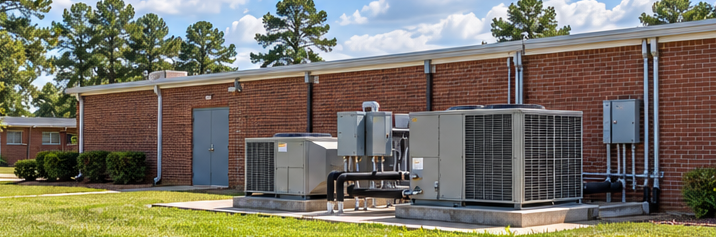
Understand available temperatures, operating status, runtime, and alarms across compatible equipment. Use that information to prioritize attention and coordinate the right technical response.
Controls can align operation with school schedules, holidays, and changing conditions. Monitoring helps identify patterns that a thermostat reading alone may miss.
Monitoring points and control functions depend on the equipment and integration. Installation, repairs, replacement, and ownership are defined by the agreement.
Review schedules and setpoints so heating and cooling support occupancy rather than an outdated calendar.
Use available equipment data and alerts to guide investigation before a small concern becomes a disruption.
Connect scheduled maintenance, qualified contractors, service history, and replacement planning.
Deferred maintenance doesn’t defer the consequences.
Emergency repairs, overtime, classroom interruptions, and premature replacement can turn a postponed task into a larger expense. Controls and monitoring help make the condition of your equipment visible.
Preventive maintenance compared with a reactive maintenance program, as reported in DOE’s 2010 operations and maintenance guide.
Read DOE guide · §5.3DOE describes this potential from high-performance control sequences across a range of commercial building types.
Read DOE controls researchPublished research provides context, not a forecast or guarantee of Iris results. These figures measure different outcomes, are not additive, and are not specific estimates for your school. A facility assessment establishes the relevant opportunities.
Bring scope, equipment selection, photometric planning, contractor coordination, installation oversight, testing, and closeout into one coordinated project.
Discuss your fieldThe systems that keep a school running are only part of the picture. Meet Phoenix Furnishings and Kaleidoscope K-12—part of the Iris family, bringing furniture and thoughtfully planned learning environments into view.
Furniture is part of how a school works. Think about how students gather, how teachers move through a room, and how a space needs to change throughout the day.
Let’s talk furniture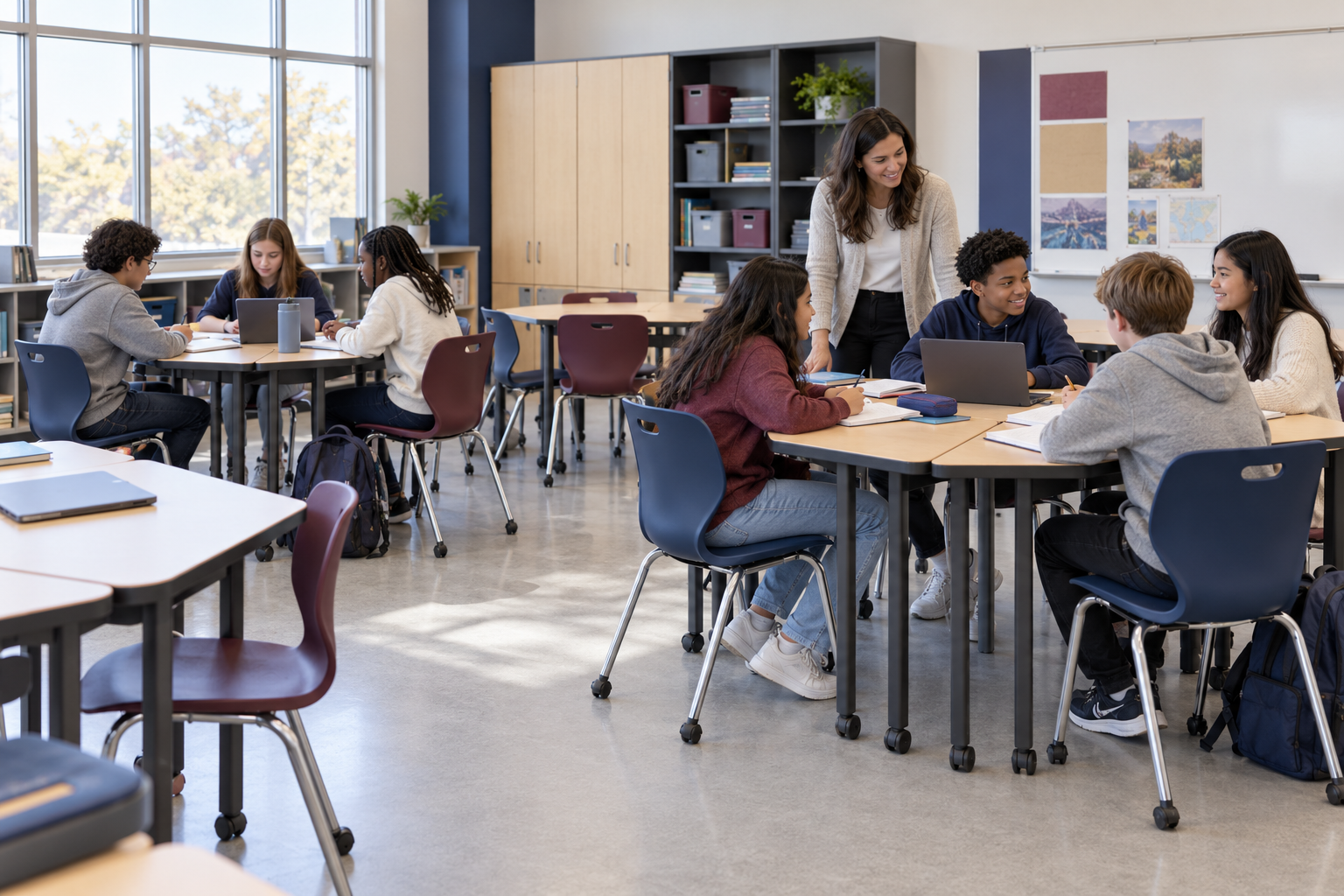
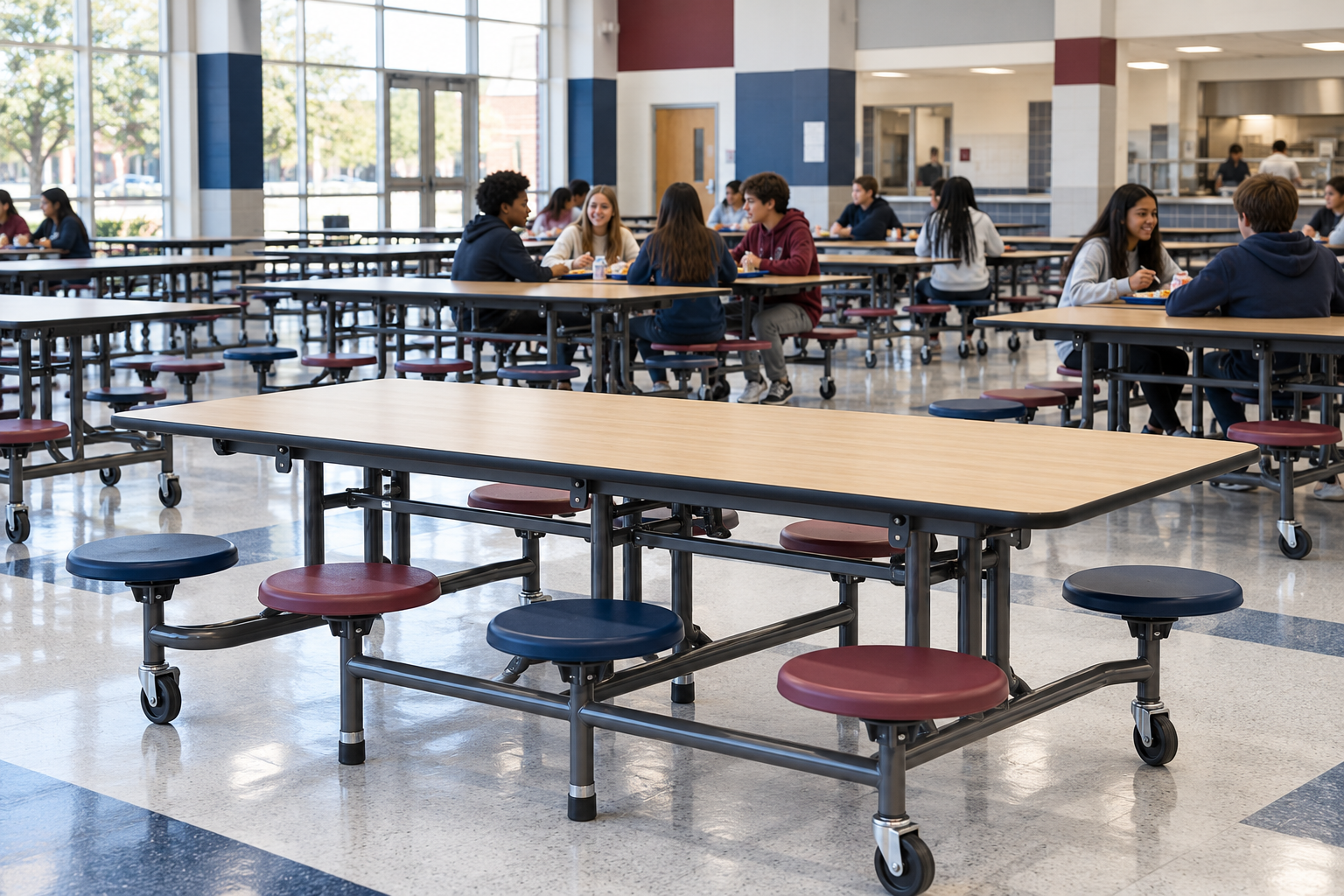
 FURNITURE FOR THE PLACES PEOPLE LEARN
Consider age, accessibility, comfort, and the day-to-day needs of students and staff.
Plan seating, work surfaces, and storage around the way the space will actually be used.
Discuss durability, flexibility, and the budget alongside the look and feel.

Kaleidoscope K-12 helps schools plan, equip, and purchase learning environments around the children who use them. From hands-on exploration to sensory support and early learning, start with the program—not a product catalog.
Explore Kaleidoscope K-12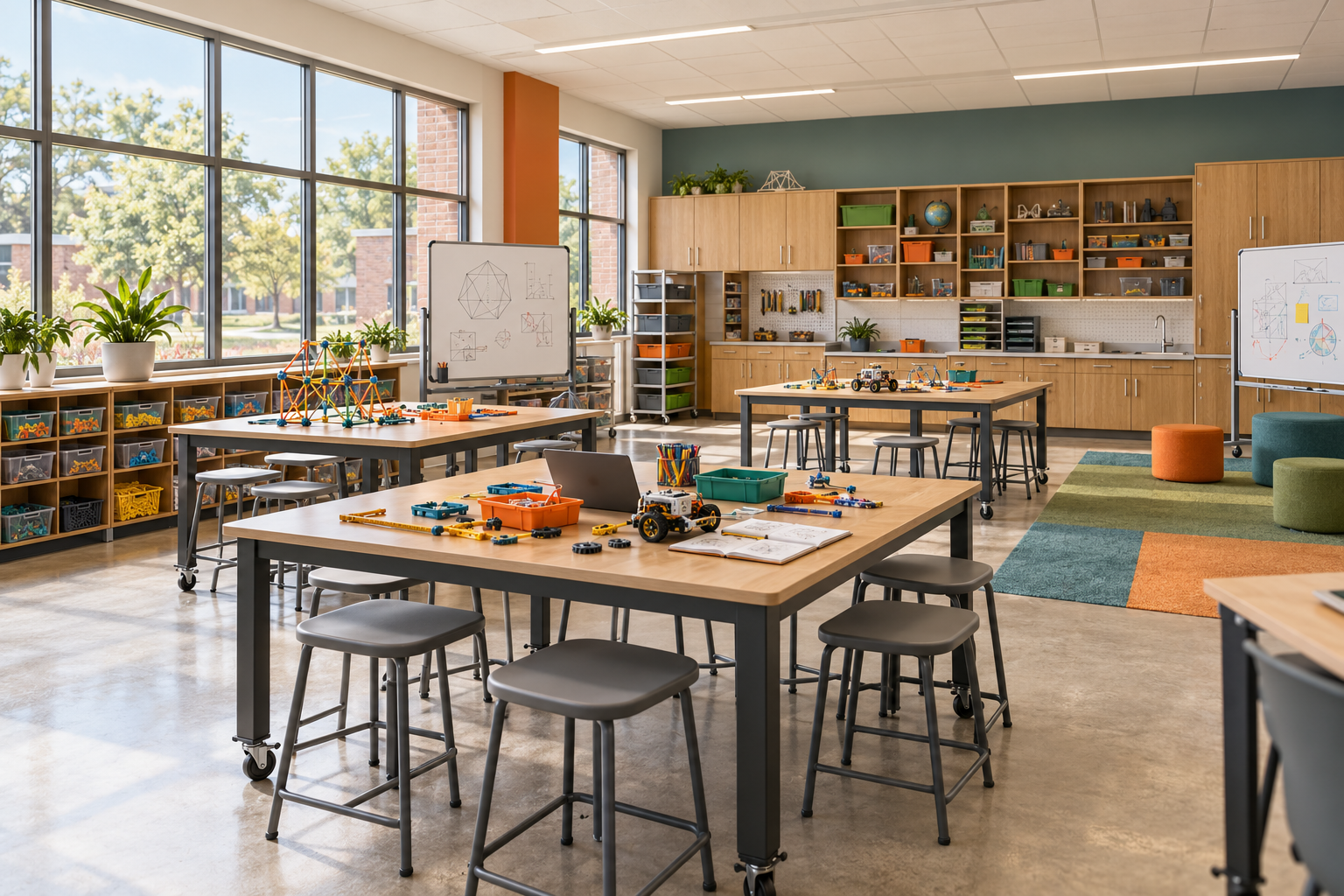
Hands-on STEM activities, manipulatives, and spaces for building, investigating, and learning together.
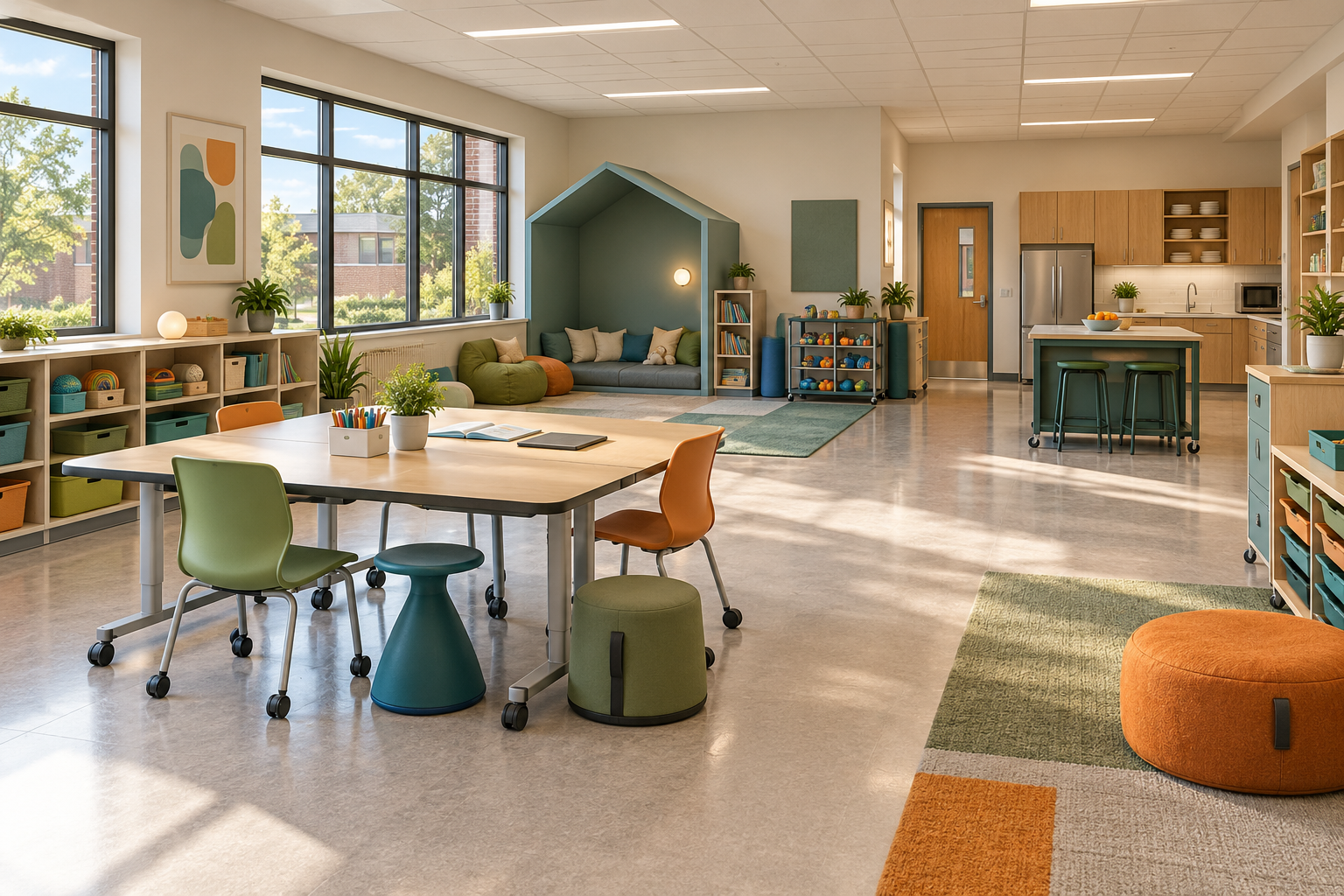
Special Education environments with adaptive seating, accessible furnishings, sensory and calming spaces, and life-skills areas.
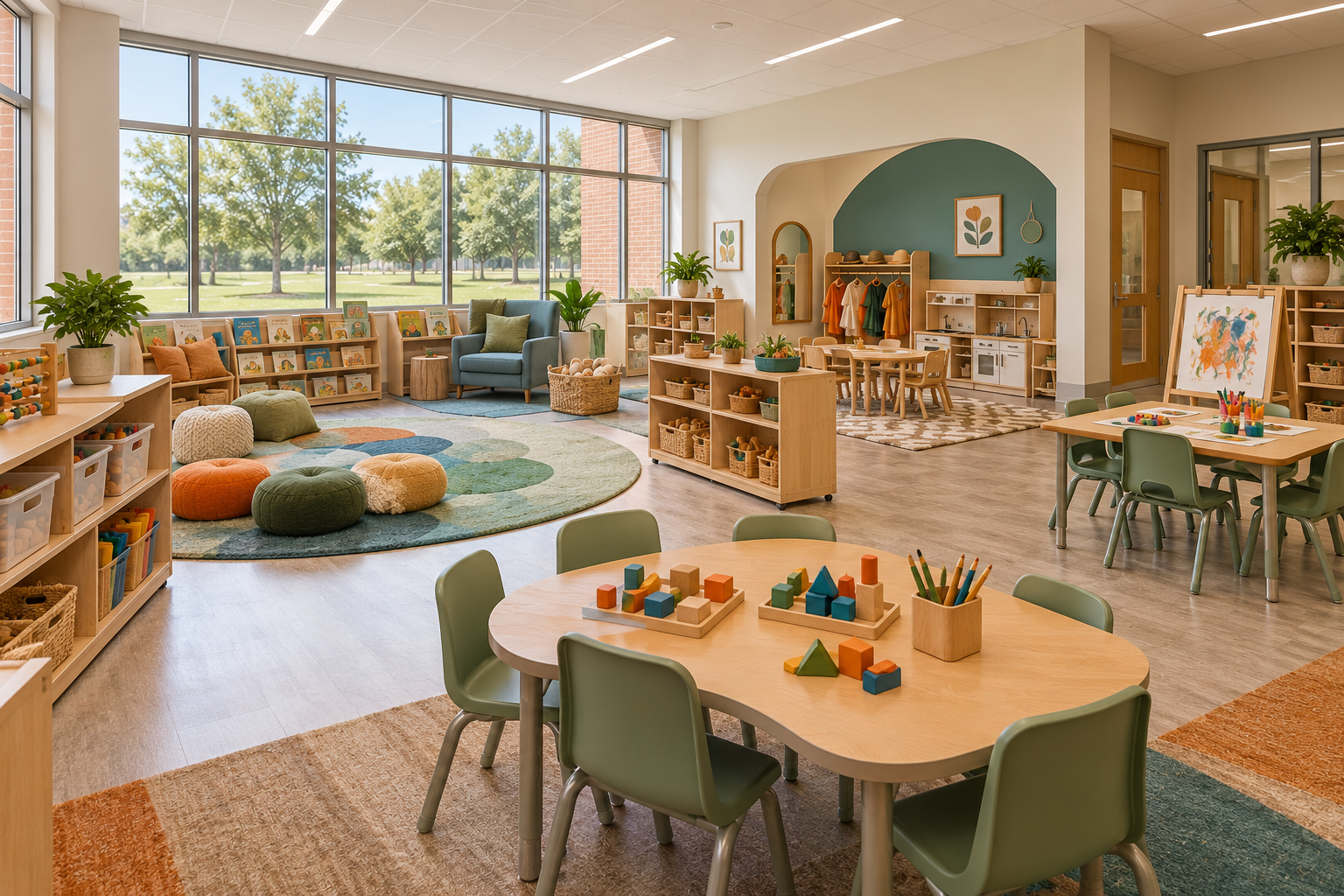
Early Learning Centers and Pre-K classrooms with purposeful spaces for play, literacy, creativity, movement, and quiet.
Tell us about your school, your systems, and your priorities.
Your location, service needs, current concerns, and desired timeline are a useful starting point.
Email Iris Working with us already? Open the project portal →